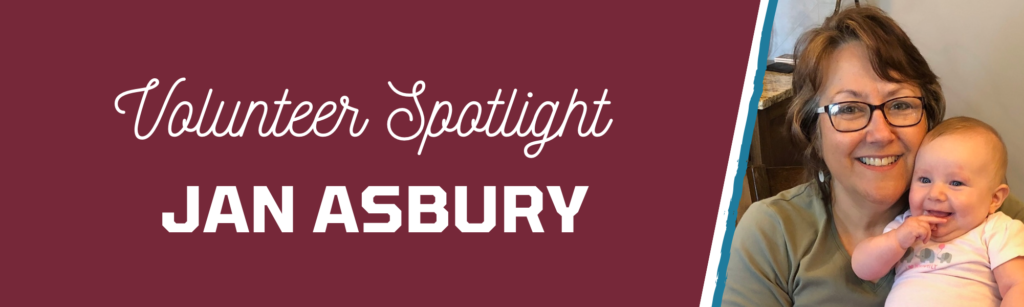
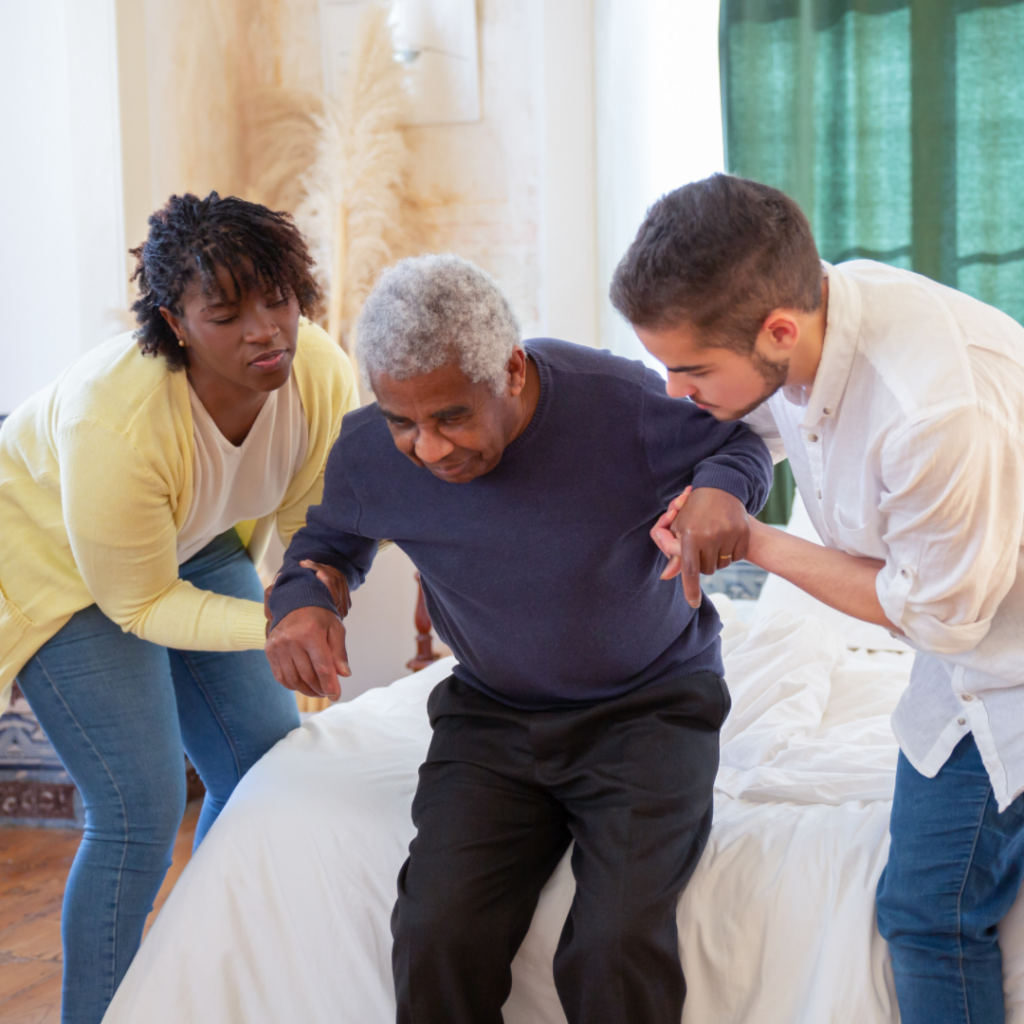
Caring Hearts and Hands operates fully through the help of volunteers like Jan Asbury, who serves on the Operations Committee and works passionately to bring as much peace as she can to end-of-life guests.
How did you first hear about Caring Hearts and Hands?
I heard about CHHC from Dorreen Rardin, who told me about the plans for the house and asked if I was interested in volunteering.
How long have you been involved with CHHC?
I’ve been on CHHC’s Operations Committee for about a year.
What draws you to the organization’s mission?
I have said for years I felt this area needed a hospice house. After learning about CHHC, I loved the idea of opening a social model end-of-life home instead. A home where one can spend their last days in a loving, respectful, caring environment that can meet their physical, spiritual and emotional needs with their loved ones at their side. The fact that this care will be free of charge is just icing on the cake!
When you talk to others about CHHC, what resonates with them?
When I speak with others about CHHC, I get very positive responses. I get the feeling that they see the need for such a home in Columbia and are pleased that one will be opening soon.
Where are you from?
I was born in Ohio and lived in Indiana and Alabama before moving to Hallsville when I was eight. I currently live in Fayette.
Tell us about your family and/or those closest in your life.
I have been married to my husband, Doug, for 35 years. I have two children and their spouses and two grandchildren, who I absolutely adore and love.
What do you hope to accomplish as a volunteer?
My goal is to provide a peaceful caring environment for the guests and their families. I hope to be a blessing to those I encounter and make a positive difference during a difficult time. I look forward to the blessings I will take away, too.
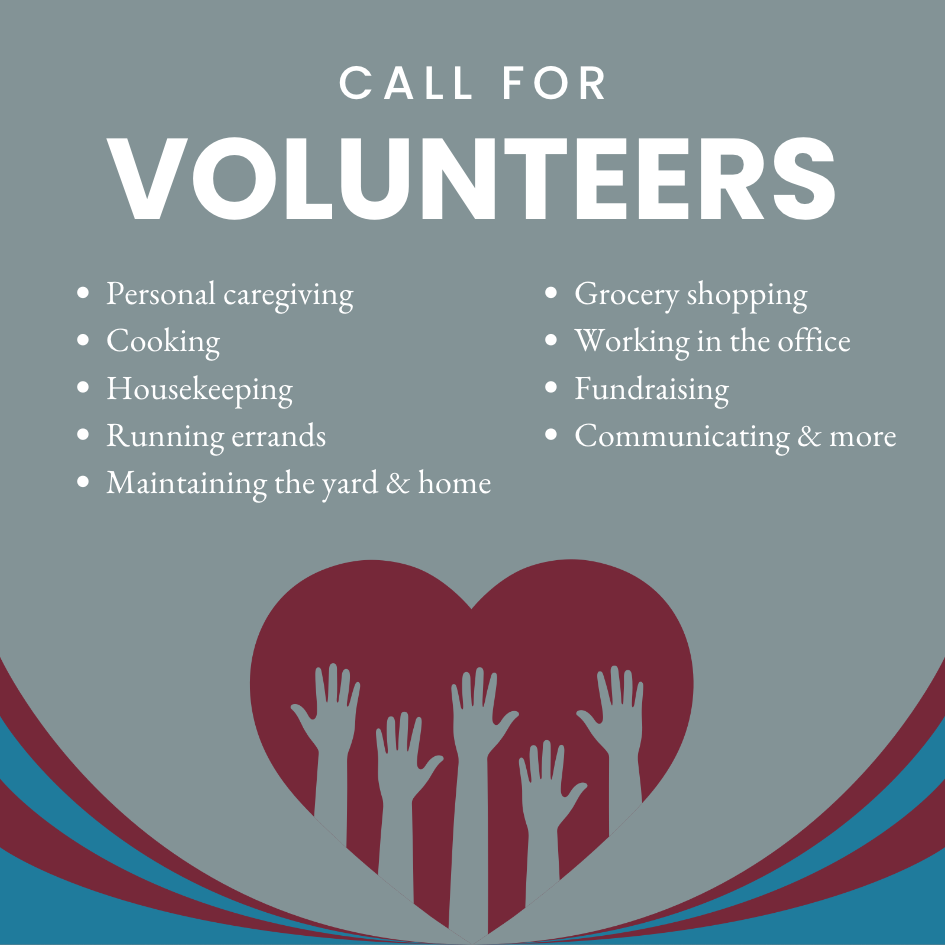
Starting and operating a home like Caring Hearts and Hands is not possible without volunteers. Both the guests and the home need help, so a volunteer’s responsibilities may include:
Personal caregiving
Cooking
Housekeeping
Maintaining the yard and home
Running errands
Grocery shopping
Working in the office
Fundraising
Communicating, and more.
Regardless of your previous experience or training, we need YOU. To learn more about how to volunteer today, you can:
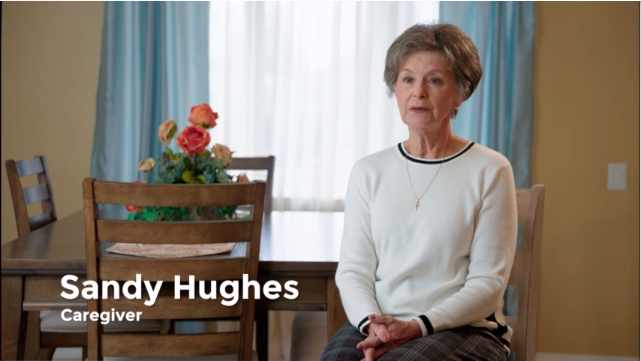
In February of 2018, Sandy Hughes of Joplin, Missouri lost her husband to cancer, sending her on a path to create a space there for a “peaceful transition from life to death.” She co-founded Solace House, a non-profit social-model home for end-of-life care. After five years of struggles and successes, Sandy is now providing encouragement and insight for the Columbia team behind Caring Hearts and Hands while still working tirelessly in Joplin to care for guests and their family members.
“I was dealing with grief from the loss of my husband, and that gave me much purpose to help start an end-of-life care home,” Sandy said. “And because of that, that starting gate, it became cathartic to me. It helped ease my grief by making sure that other people had a place to go to, because I did not. Solace House is a community of hearts. And those volunteers that come are so dedicated. They just love it. They just love what they do. Caring Hearts and Hands, it’s going to be very successful, I assure you.”
Both Solace House of the Ozarks and Caring Hearts and Hands of Columbia are part of the Omega Home Network, which provides assistance to developing and operating social-model homes across the country.
Sandy visited Columbia on March 14 for a question and answer session to help share the knowledge she and her team have earned over the past several years.
“There’s no reason for reinventing the wheel, especially if we’re going to be helping a sister city,” Sandy said. “Columbia is special. And those individuals that were there that night that I got to meet are very sincere and very passionate about what they’re trying to do. And we cheer them on; we want them to be successful.”
“Columbia is special. And those individuals that were there that night that I got to meet are very sincere and very passionate about what they’re trying to do. And we cheer them on; we want them to be successful.”
Sandy Hughes
Solace House began as Sandy gathered others in Joplin with a similar heart, as well as her husband’s oncologist, doctors, nurses, social workers and hospice providers. Within a year, the organization became an official non-profit, and by January of 2020 Sandy signed a lease for a house. They started turning this house into the perfect end-of-life home when COVID hit.
Though the pandemic certainly set them back, it also highlighted an even more intense need for a place like Solace House. With state safety guidelines, families were not allowed into nursing homes or hospitals to visit their dying loved ones. Good-byes were said through windows and phone calls. Many died alone.
So when Solace House finally opened in June of 2020, they were able to provide relief and comfort to many families. They allowed loved ones to visit and stay with their guests within the home – after COVID testing and with masks, of course.
“It was just an answered prayer for a lot of people,” Sandy said. “The timing was just incredible. Now, with that behind us, it’s been full throttle.”
The organization and others like it provide a free home for guests in their last month of life whose care needs cannot be met in their own homes, giving 24-hour support from volunteers for guests’ physical, emotional and spiritual needs. They do not replace medical care, but instead give a space for families to be around their departing loved ones in a caring and supportive environment.
“Oftentimes, when a guest comes to the house, they are exhausted from being in the hospital,” Sandy said. “When they come through those front doors, it’s as if a weight has been lifted off their shoulders. I have seen it over and over again. Solace House, it is truly transformational. I just can’t explain it any more than that. It’s just they know why we’re there. And we know why they’re there. And it’s just a matter of showing up at the house.”
With two beds in each bedroom, families are welcome to stay around the clock, doing laundry, showering, cooking and doing whatever else there, truly treating it as if they are in their own home.
“It’s not just taking care of the guest,” Sandy expressed. “I have found in the past year that we are really actually caring equally, if not more, for the family members. They are heartsick that they’re going to lose their loved one. And I find that we are picking up the pieces. I said that at the meeting in Columbia, just to be there for a loved one with some hand holding some hugging. It’s just so important. And I cannot emphasize that enough. In many respects, we’ll spend almost the equivalent with the family if not more than with our guest. And the guest is our focus. They’re inseparable.”
Now, Columbia can benefit from the lessons learned by Solace House and can find comfort in the established community of Omega Home Network.
From her experience, Sandy expects that Caring Hearts and Hands will face their biggest challenge in finding volunteers.
“Everything else is easy. It’s just finding the volunteers who have a heart for the mission. Once they come on board, and they have the experience, it’s easy. Our volunteers who have been trained have never left. They love what they do. But finding the volunteers, that’s the biggest challenge that they’re going to have.”
Looking forward, Sandy has high hopes as more areas recognize the need for spaces like Solace House and Caring Hearts and Hands. She recognizes the passionate and sincere hearts within this starting group.
“Once they start, they’re never going to look back,” she said. “Because it’s just going to keep going and going and going. And there’s going to be more houses like this in Missouri and across the nation. I’m just so excited for Columbia. There’s going to be a few hiccups along the way, some things that they didn’t plan for. But once they get that core group of volunteers trained, then they’re off and running. That’s all it’s gonna take.”
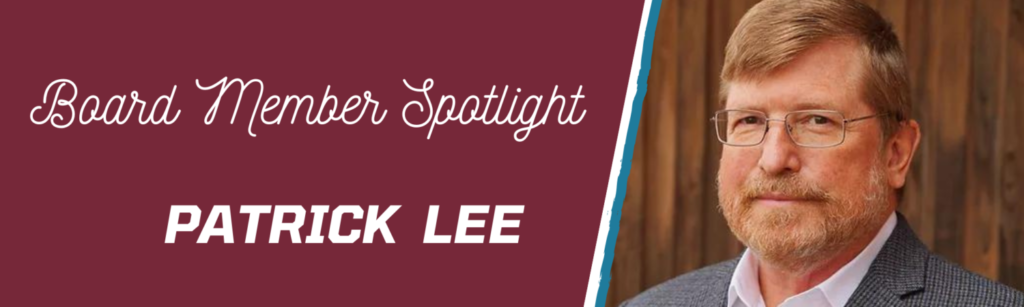
For Patrick Lee, it’s important to focus on one phrase: Service above self.
Patrick’s healthcare experiences have spanned 40 years – and have given him a wealth of exposure to all facets of what it takes to lead a healthcare organization. Patrick now serves as the executive director for Services for Independent Living and leads an organization that endeavors empower people with disabilities, seniors, and veterans to maximize their independence and promote a barrier-free community
While his role as chair for the Caring Heart and Hands of Columbia board is a volunteer role, his experiences have been crucial as the organization moves from a “start-up nonprofit” (a term he often uses) toward an operating and functioning end-of-life care home serving mid-Missourians.
To get to know Patrick a little better, here’s a snippet from an interview with him about his experiences and his passion for Caring Heart and Hands.
You spent years in healthcare administration. How does CHHC fit into the mold when you consider your professional passions?
Healthcare is a people-caring-for-people business and it takes tremendous heart and passion to be successful. End-of-life care is just a more passionate form of this, and the social model, end-of-life, personal care home brings marvelous innovation to that passionate caring.
How did you get involved with the CHHC board?
I am actively involved in the Rotary Club. My club sponsor from 20 years ago was approached by Jackie and Dorreen, CHHC co-founders, to serve on the Board. While he didn’t have time, he said “I know just the guy” and recommended me.
They reached out to me. I had dinner with them. And I was sold!
You now serve as Executive Director of Services for Independent Living. Do you see a connection between the work there and with CHHC?
There is a connection because everyone will reach an end-of-life stage, and most would prefer to pass in a home versus an institutional setting. That applies equally to SIL consumers who are individuals with disabilities, the elderly, and veterans.
Both organizations are charitable in nature with major operations components, which I find most interesting.
What short-term vision do you have for CHHC as the Board president? Where do you want to see the org in 1-3 years?
The short-term goal is to get our home open and operating effectively and efficiently early next year, providing high-quality care and service that is second to none!
The longer team goal is to expand our capacity beyond two guests. If the Missouri regulations do not evolve for us to serve more than two in one home, then we will develop a modular approach to operating multiple homes in a way that harnesses scale economies. The more central Missourians we can serve them better!
So … work, work, work! What do you do for fun? How do you enjoy yourself? What brings you joy?
Activities with my granddaughters and just being with my granddaughters! When those girls aren’t melting my heart, I enjoy woodworking and just spending time with my family. I continue to spend time with Rotary and other service projects because I find tremendous satisfaction in “service above self.”
According to an article written by Dr. Karen Wyatt, a hospice and family physician, there are six reasons why the social model home hospice home is a much-needed solution for end-of-life care. Wyatt, an expert on the topic of end-of-life care, has written a book on the subject: “What Really Matters: 7 Lessons for Living from the Stories of the Dying.”
According to a study reported by AARP Public Policy Institute, there will be a severe shortage of family caregivers as the Baby Boom generation ages and faces the end-of-life. While there are currently seven potential family caregivers for every patient, this ratio is expected to drop to 3:1 by 2050.
2. Shortage of paid caregivers.
In addition, a study published in the Health Affairs journal in June indicates that “at least 2.5 million more long-term care workers will be needed to look after older Americans by 2030.”
3. Need for family respite.
The Institute of Medicine’s 2014 report Dying in America points to a current need for respite and support for family caregivers to help avoid burnout and resulting emergency hospitalizations. Social model hospice homes can provide respite care as well as terminal care, allowing for much-needed rest for exhausted caregivers.
4. Need for home renovation for safety and mobility.
The IOM report “Dying in America” also cites a “lack of publicly-funded programs for retrofitting homes for safety features and wheelchair accessibility. Social model hospice homes are already designed to meet safety and mobility standards and can eliminate the need for expensive renovations to family homes.”
5. Cultural barriers to hospice care.
Some of these barriers include a lack of cultural diversity in hospice staff, mistrust of the healthcare system, and worry about insurance coverage and cost of care. The community-based social model hospice home has the potential to overcome some of these barriers by utilizing volunteers and caregivers from the patient’s own cultural group and neighborhood, by functioning largely outside the health care system, and by eliminating financial concerns through unique funding streams.
6. Reduction in Medicare payments for hospice and home care.
Under the social model of care for the dying, there is no federal or state funding because these homes do not function as medical facilities. In many states, they are licensed under the Department of Social Services rather than the Department of Health. Social model hospice homes rely on foundations and grants, community fundraising, and contributions from individual donors for funding.